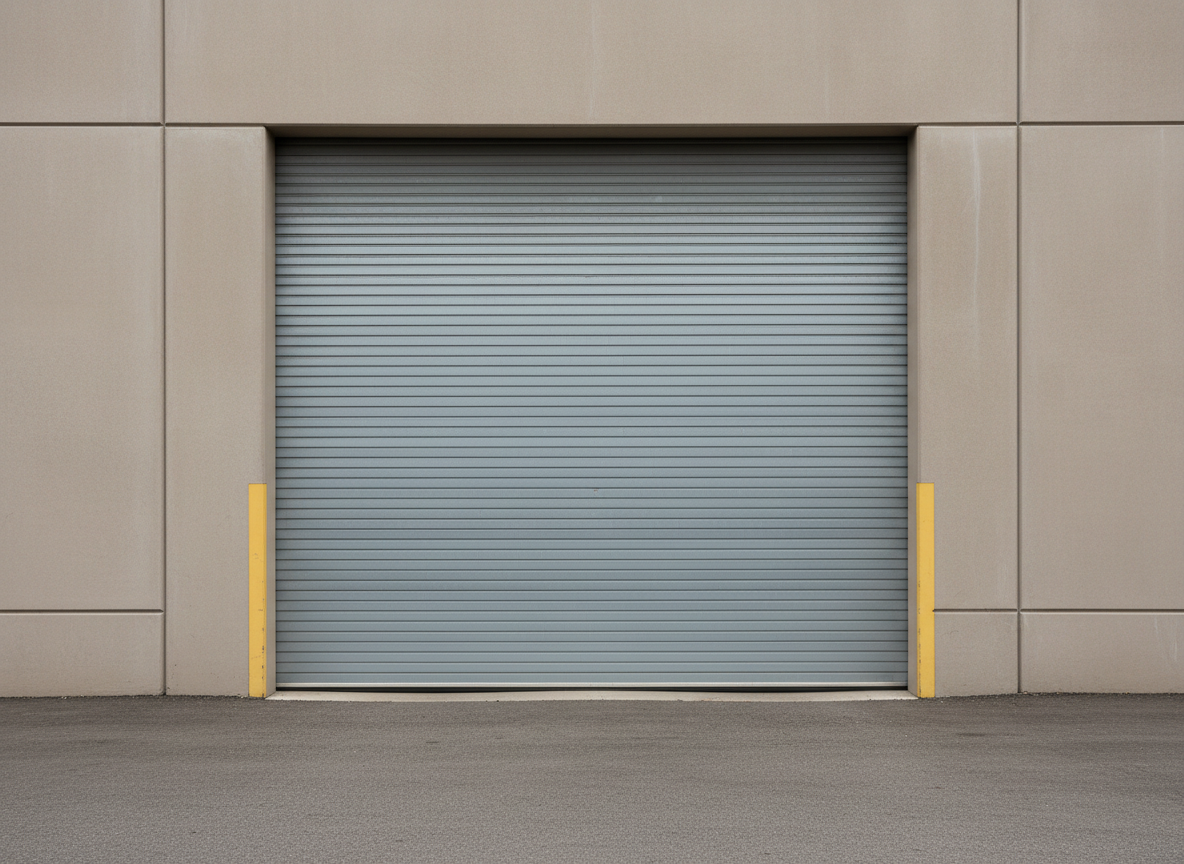
Businesses around Houston use sectional doors at loading bays, rolling steel doors at warehouses and shops, and large doors at auto and equipment bays. Commercial doors are usually bigger and heavier than home doors and are opened and closed more often, so parts such as springs, rollers, hinges and operators work harder.
Typical problems include a door that is stuck open and leaves the building unsecured, a door that is stuck shut and blocks a bay, a door that jams or binds as it rolls, an operator that stops or reverses, a bent track after a vehicle strike and a broken spring or cable on a large door. Springs and cables on heavy doors hold even more stored energy, so they are not a place for a first attempt at a repair.
Keep vehicles, forklifts and people clear of the door. Do not run a damaged door with the operator, and do not stand under a door that is partly open. If staff are tempted to force a door closed at the end of the day, it is better to block off the bay and call.
When you call, describe the door type if you know it: sectional or rolling steel, roughly how large, and whether it has a motor operator or a chain hoist. Say whether it is stuck open or shut, who can meet the provider at the building and whether anything is stored behind the door.
Your call is connected to an independent local service provider. Whether that provider handles commercial doors depends on the provider, so say at the start that it is a business door. Ask for the price before work starts.
How it works
- 1
Secure the area
Block off the bay and keep vehicles and people clear of the door.
- 2
Note the door and the problem
Door type, rough size, operator type and what the door does now.
- 3
Call and say it is a business door
Confirm the provider handles commercial doors. Ask for the price before work starts.